🏯 Why Kyoto Is One of the Safest and Most Rewarding Solo Travel Cities in the World
Kyoto has a way of slowing time. The city does not announce itself loudly or try to impress at first glance. Instead, it unfolds in layers, inviting patience, curiosity, and quiet attention. For solo travelers, especially those seeking a sense of calm rather than constant stimulation, Kyoto offers something rare. It is a place where safety feels embedded into daily life and where solitude is not only accepted but respected. Walking alone through narrow streets, sitting quietly at a temple, or boarding a local train without conversation never feels strange here. Kyoto rewards those who arrive with openness and leave space for reflection, making it one of the most fulfilling cities in the world to explore on your own.
A City Designed Around Order, Respect, and Everyday Safety
Kyoto’s reputation for safety is not accidental. It is the result of deeply ingrained cultural norms built around mutual respect, predictability, and social responsibility. Streets are clean, signage is clear, and public behavior follows an unspoken code that values consideration for others. As a solo traveler, this consistency creates immediate ease. You can walk at night through residential neighborhoods, cross the city using public transport, or sit alone in small eateries without drawing attention.
Public transportation is especially reassuring. Trains and buses run on time, stations are well lit, and announcements are structured to minimize confusion. Even when language barriers appear, the systems themselves guide you forward. Many solo travelers choose rail passes early in their trip, not for luxury but for the confidence that movement will remain simple and reliable. Kyoto’s scale also contributes to safety. It is large enough to feel rich and complex, yet compact enough that you never feel lost for long.
Another quiet comfort is the city’s approach to assistance. Locals may not initiate conversation, but help is always close. If you pause with a map or hesitate at a crossing, someone often notices. Travelers who join occasional walking tours often remark how quickly they gain orientation, not just geographically but emotionally. Even investing in travel insurance feels more like a formality here than a necessity, which speaks volumes about the city’s overall security.
Solo Exploration Feels Natural, Not Isolating
Kyoto excels at making solitude feel intentional rather than lonely. The city’s rhythm supports individual exploration. Early mornings in temple districts, late afternoons along the Kamo River, and quiet evenings in side streets all feel designed for one person moving at their own pace. There is no pressure to fill silence or rush through experiences.
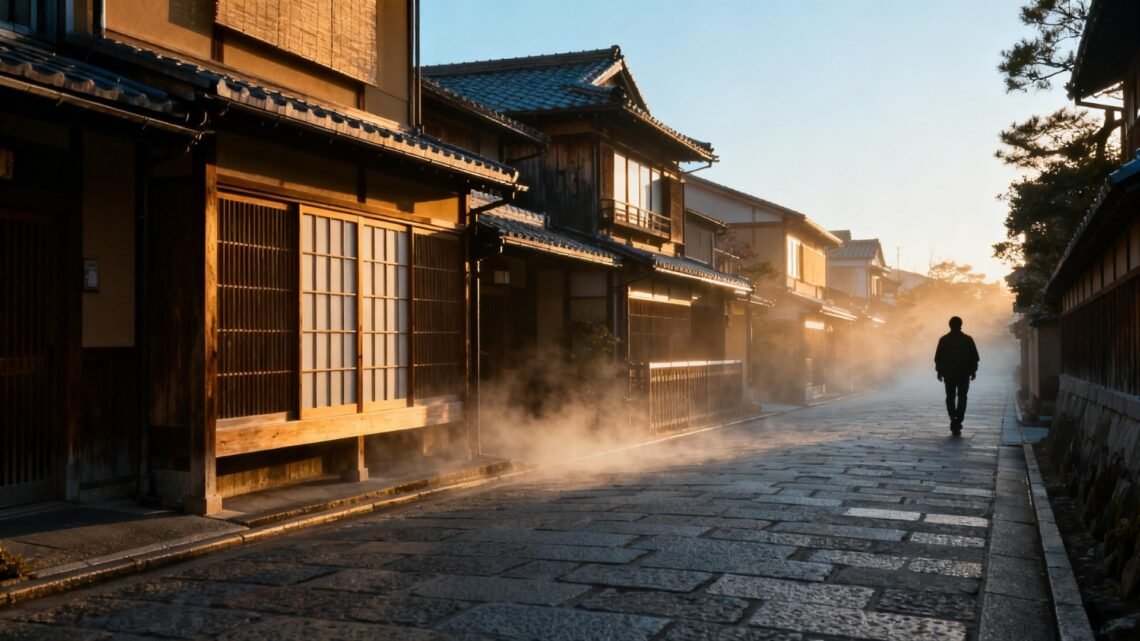
Neighborhoods like Gion and Arashiyama invite slow wandering. You can spend an hour watching light shift across wooden facades or listening to gravel crunch beneath your shoes. Cafes welcome single guests with counter seating and unhurried service. Restaurants often focus on the craft of food itself, not conversation, allowing you to dine alone without self-consciousness. Many travelers appreciate having luggage storage options near stations, freeing them to explore lightly and comfortably between accommodations.
Nature is another gift for the solo visitor. Kyoto is surrounded by hills, bamboo groves, and forested paths that feel safe even when quiet. Trails are well marked, and other walkers appear often enough to reassure without intruding. Some travelers enhance these moments with guided hikes to understand the landscape more deeply, while others rely on language apps simply to read trail signs and temple notices with greater clarity.
Meaningful Encounters Without Pressure or Risk
One of Kyoto’s greatest strengths as a solo travel destination is its ability to offer meaningful encounters without forcing interaction. Cultural experiences here are structured, respectful, and often solitary by design. Tea ceremonies, calligraphy sessions, and temple visits encourage presence rather than performance. You are allowed to observe, participate, and leave quietly.
This structure creates safety not only physically but emotionally. There is no expectation to negotiate aggressively, fend off unwanted attention, or explain yourself. Many temples provide clear instructions in multiple languages, guiding visitors through rituals and spaces with care. Purchasing temple tickets becomes a calm exchange, not a stressful transaction. Workshops often limit group sizes, allowing individual focus while still offering gentle human connection. Participating in cultural workshops gives solo travelers a sense of belonging without demanding social energy.
Kyoto’s evenings reinforce this balance. While nightlife exists, it is understated. Streets remain orderly, and entertainment districts feel controlled rather than chaotic. You can enjoy a quiet drink, stroll along lantern-lit alleys, or return to your lodging early without concern. Some travelers keep a travel journal to capture these subtle moments, finding that Kyoto’s calm encourages reflection more than constant documentation.
Why Kyoto Leaves Solo Travelers Changed
Kyoto does more than provide safety and beauty. It reshapes how you experience being alone. The city teaches you to trust your own pace, to notice details, and to find comfort in routine. Days develop a gentle structure, morning walks, afternoon explorations, evening stillness, that feels grounding rather than repetitive. You begin to recognize familiar corners, favorite convenience stores, and preferred bus routes. Independence grows quietly.
This sense of personal rhythm is what makes Kyoto so rewarding. You are not performing travel for others or chasing highlights to prove something. Instead, you are present. The city’s respect for space mirrors the respect you begin to show yourself. By the time you leave, solitude no longer feels like an absence. It feels like clarity.
For solo travelers seeking a destination that offers reassurance without boredom and depth without overwhelm, Kyoto stands apart. Its safety allows you to relax fully, and its rewards reveal themselves slowly, in moments of stillness, attention, and quiet confidence. Few cities offer that combination so completely, and fewer still do so with such grace.


You May Also Like
