🎮 How I Built a Fully Ready Gaming Setup Under $1,000 That Runs Modern Titles Smoothly
Building a gaming setup on a tight ceiling forces sharper decisions and reduces the margin for unnecessary upgrades. This configuration stayed under $1,000 without compromising modern-title performance, and the constraints pushed each choice toward actual impact rather than theoretical benchmarks. The final system was capable of high-setting 1080p play, stable multitasking, and balanced audio support, all without drifting into the expensive, future-proofing mentality that often inflates budgets far beyond what performance requires.
The Core Tower That Set the Direction
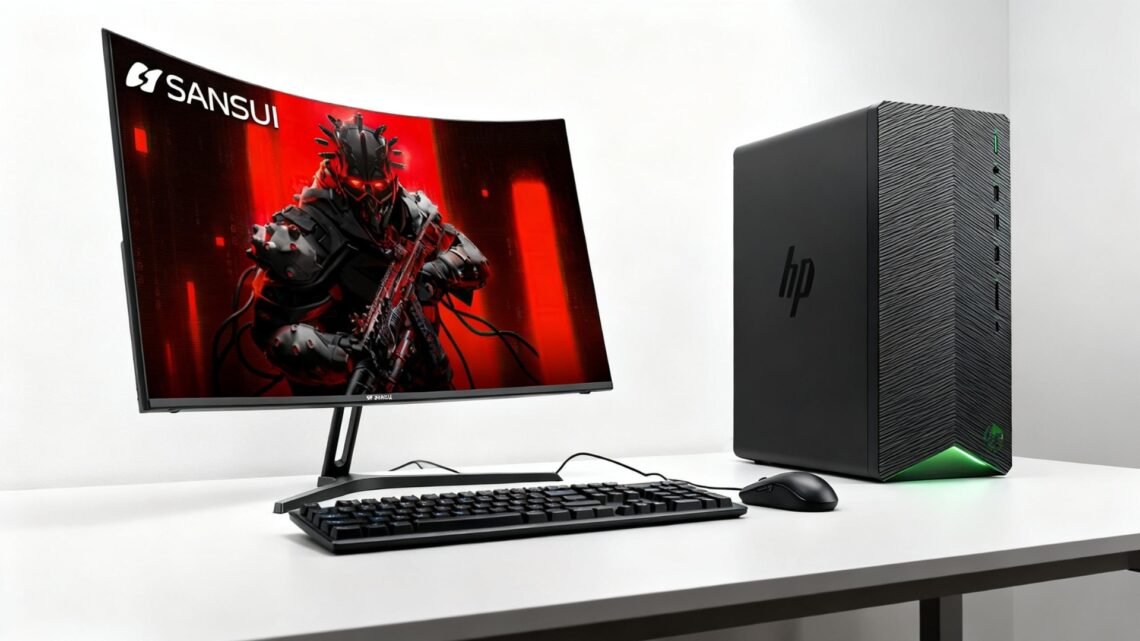
The foundation was an HP Pavilion Gaming Desktop TG01 with an Intel i5-10400F and a GTX 1650 GPU. That combination defined the performance profile early: grounded, modern, and efficient rather than speculative. It handled high-setting 1080p reliably, and the absence of any demand for 4K output removed both cost and heat complexity. The machine initially included only 8GB of RAM, which proved fully adequate for single-screen gaming and general use; expansion wasn’t required until later when multitasking across two monitors became routine. The tower’s internal structure left sufficient room for that expansion without pushing the system toward an unnecessary rebuild or complete platform shift.
The Display Choice That Balanced Speed and Cost
The display became the pivot point where practicality overtook brand chasing. A 27-inch curved 200Hz monitor delivered the responsiveness needed for fast titles without entering the price tier associated with esports-grade panels. Its built-in speakers were acceptable for initial use, removing the immediate need for dedicated audio hardware while keeping the setup cost contained. The PC’s Bluetooth support ensured that upgrading to headphones or an external Bluetooth speaker remained a clean, cable-free transition when refinement became the priority. The curvature, refresh rate, and color response were more than the GPU required for 1080p performance, but not so inflated that the monitor became a disproportionate share of the budget.
27-inch Curved 200Hz Gaming Monitor
The Total Build and What Actually Mattered
The full cost just around $950, including the monitor, keyboard, and mouse—landed under the four-digit ceiling without cutting into performance. Keeping the GPU at the GTX 1650 level and avoiding any push toward 4K output preserved the budget and aligned with the actual demands of modern titles optimized for 1080p. The keyboard and mouse were treated as functional rather than aesthetic purchases; responsiveness and durability mattered more than RGB patterns or premium materials. The later RAM upgrade improved multitasking across two monitors but didn’t influence gaming stability, reaffirming that the initial configuration was already balanced for its purpose. Every element stayed focused on what contributed directly to playability: frame consistency, thermal behavior, and workflow comfort.
Closing
A sub-$1,000 gaming setup works when each component serves present-day needs rather than hypothetical future ones. The tower’s processor-GPU pairing, the monitor’s refresh rate and integrated audio, and the staged approach to RAM growth formed a configuration that ran modern titles smoothly without drift toward feature excess. The result was a complete system tuned to performance rather than prestige—responsive, reliable, and intentionally built within limits that strengthened rather than constrained the final outcome.


You May Also Like
🖥️ How to Build a High-End Gaming Setup That Still Feels Minimalist

❄️ The Best Holiday Gaming Gear for a Smooth, Cozy December Break