🌿Why Small Daily Rituals Define Long-Term Identity (and How to Build Them Intentionally)
Identity rarely changes in dramatic moments. It forms quietly, shaped by what you return to each day when no one is watching. The routines you keep, the pauses you honor, and the standards you maintain become the scaffolding of who you are over time. This is why small daily rituals matter more than ambitious plans or occasional breakthroughs. They are the repeated signals you send to yourself about what you value. When practiced consistently, rituals turn intention into identity. When designed with care, they create a life that feels aligned rather than reactive.
How Rituals Become Identity Markers
A ritual is not the same as a habit. Habits often focus on efficiency, while rituals carry meaning. A daily walk becomes a ritual when it marks a transition from work to rest. A morning check-in becomes a ritual when it centers your priorities before the day takes over. These actions work because identity is built through repetition and emotion combined. What you do consistently, and how you feel while doing it, shapes how you see yourself. Someone who writes each morning begins to think of themselves as a writer, even if the output is modest. Someone who stretches before bed becomes a person who cares for their body, even when progress feels slow.
The power of rituals lies in their scale. Because they are small, they are sustainable. Because they are personal, they resist comparison. Many people begin by anchoring rituals to existing structures, like waking up or preparing dinner, using simple supports such as a daily planner to mark consistency. Others prefer visual reinforcement through a habit tracker, turning repetition into a quiet form of proof. Over time, these signals accumulate. The ritual becomes a vote for the person you are becoming. Miss a day and nothing collapses. Return the next day and the identity continues to take shape.
Designing Rituals That Actually Stick
Most rituals fail because they are borrowed rather than built. People adopt routines that look impressive but feel unnatural, then abandon them when life applies pressure. Intentional ritual design begins with honesty. You start by asking what kind of person you want to be, then work backward to the smallest daily action that supports that identity. If you want to be thoughtful, five minutes of reflection is enough. If you want to be resilient, a brief physical reset can do the job. The ritual must fit your real life, not an idealized version of it.
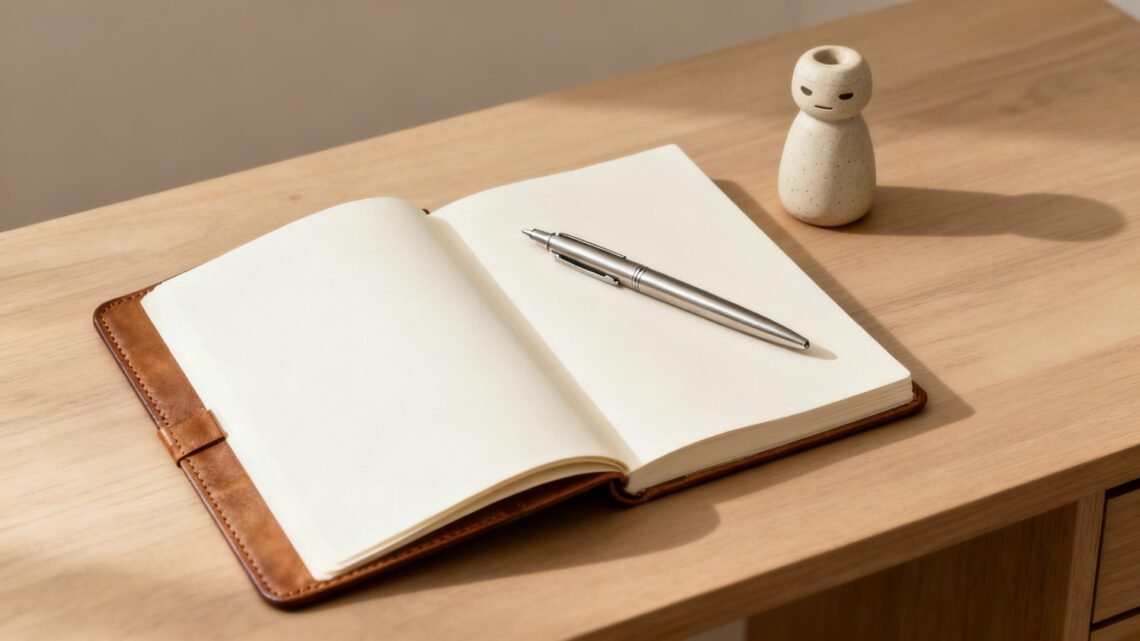
Placement matters as much as intention. Rituals thrive when they are attached to moments that already exist. Morning rituals benefit from simplicity, often supported by tools like a morning journal that invites clarity without demand. Focus rituals during the day can be framed as protection rather than productivity, using a focus timer to create boundaries around attention. The key is to remove friction. A ritual should feel like a relief, not an obligation. When resistance appears, it is usually a sign the ritual is too big, too vague, or too disconnected from the identity it is meant to serve.
Emotion is the final ingredient. A ritual that feels good is one you return to. This does not mean it is always easy, but it should feel meaningful. Lighting a candle, playing the same song, or stepping outside for fresh air can transform a simple action into a moment you look forward to. Over time, the ritual becomes a stable point in an otherwise unpredictable day.
Letting Rituals Evolve Without Losing Them
One of the most overlooked aspects of ritual building is permission to evolve. Life changes, seasons shift, and identities deepen. A ritual that once fit perfectly may begin to feel stale or misaligned. This does not mean it failed. It means it did its job. The goal is not rigidity, but continuity. You keep the essence while adjusting the form. A nightly writing ritual may become a nightly reading ritual during a busy season. A long walk may shorten into a moment of stretching and breathing.
Reflection helps maintain this balance. Periodically checking in allows you to refine without abandoning. Some people use reflection notes to capture how rituals feel over time. Others rely on calm tools in the evening to assess whether the day supported their values. Rest itself can become a ritual, supported by simple sleep aids that signal closure and care. These adjustments keep rituals alive rather than brittle.
What matters most is the throughline. The ritual continues to affirm the identity you are building. It remains small enough to survive disruption and meaningful enough to matter. When rituals evolve with intention, they become companions rather than constraints.
Long-term identity is not forged through grand declarations. It is shaped quietly by the small actions you repeat and the meaning you attach to them. Daily rituals work because they are humble and persistent. They ask little and offer much. When built intentionally, they align your days with your values and your actions with your aspirations. Over time, you stop trying to become someone else. You simply live as who you already are, one small ritual at a time.


You May Also Like

🌙Reclaiming the Quiet Moments That Make Life Feel Full Again

🎬Peter Greene Iconic Roles: His Most Memorable Characters and Career Legacy